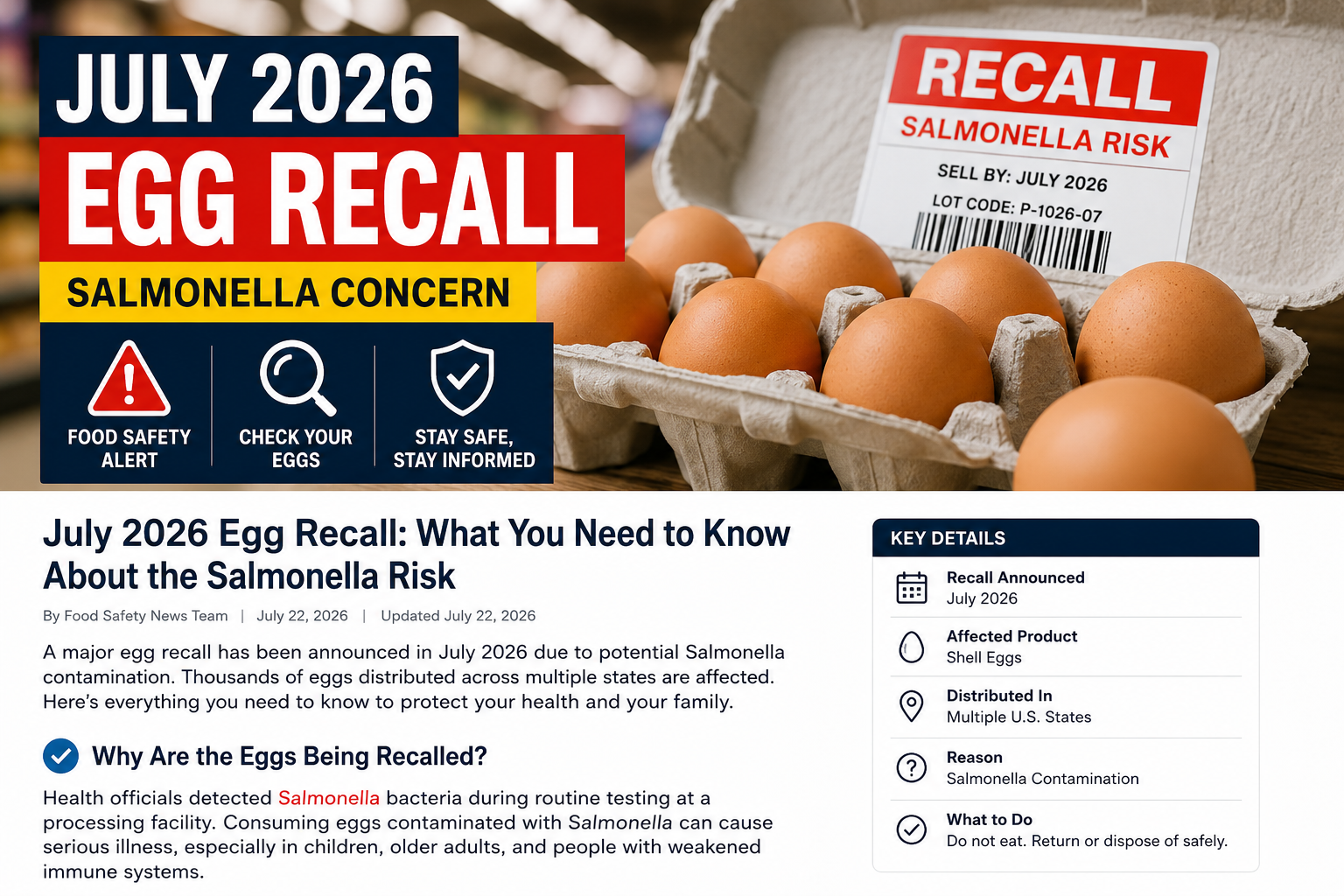
July 2026 Egg Recall: What Consumers Need to Know
A major July 2026 egg recall has become one of the most searched topics in the United States after health officials announced that certain eggs were recalled because of potential Salmonella contamination. Millions of consumers are now checking their refrigerators to determine whether the eggs they purchased are included in the recall.
If you recently bought eggs, here’s everything you need to know about the recall, possible health risks, and the steps you should take to protect yourself and your family.
Why Were Eggs Recalled?
Egg recalls are typically issued when routine testing or public health investigations indicate that a product may be contaminated with harmful bacteria.
In this case, the recall was announced after officials identified a potential Salmonella contamination risk in certain egg products. Salmonella is one of the most common causes of foodborne illness in the United States.
Health authorities recommend that consumers avoid eating recalled eggs until they have confirmed whether their product is affected.
What Is Salmonella?
Salmonella is a bacteria that can cause food poisoning.
Common symptoms include:
- Diarrhea
- Fever
- Stomach cramps
- Vomiting
- Nausea
- Headache
Symptoms usually appear 6 hours to 6 days after exposure and may last several days.
Most healthy adults recover without treatment, but severe illness can occur in:
- Children
- Older adults
- Pregnant women
- People with weakened immune systems
Which Eggs Are Included in the Recall?
Consumers should carefully check:
- Brand name
- Carton size
- Plant code
- Julian date
- Sell-by date
The exact list of affected products depends on the official recall notice. Consumers should compare their cartons with the latest information provided by food safety authorities and retailers before consuming any eggs.
What Should You Do If You Purchased Recalled Eggs?
If your eggs match the recalled products:
Do NOT Eat Them
Even if the eggs appear fresh, they may still be contaminated.
Return or Dispose of Them
Most retailers offer refunds for recalled food products.
Clean Your Refrigerator
Wash any surfaces that may have come into contact with the eggs using hot, soapy water and sanitize afterward.
Monitor Your Health
If you experience symptoms after eating recalled eggs, contact your healthcare provider.
How to Reduce the Risk of Salmonella
Food safety experts recommend:
- Cook eggs until both the yolk and white are firm.
- Wash hands after handling raw eggs.
- Refrigerate eggs promptly.
- Avoid cross-contamination with raw meat or poultry.
- Keep kitchen surfaces clean.
Why Is the July 2026 Egg Recall Trending?
Search interest surged because:
- Food safety alerts spread quickly on social media.
- Consumers wanted to know whether their eggs were affected.
- Retailers began removing recalled products from store shelves.
- People searched for symptoms of Salmonella infection.
As food recalls become national news, consumers increasingly rely on trusted updates before making food safety decisions.
Frequently Asked Questions
Are all eggs being recalled?
No. Only eggs identified in the official recall announcement are affected.
Can cooking kill Salmonella?
Cooking eggs thoroughly reduces the risk because Salmonella bacteria are destroyed by adequate heat. However, if a product has been officially recalled, public health guidance is generally to not consume it and instead follow the recall instructions.
What are the first symptoms of Salmonella?
Diarrhea, stomach cramps, fever, nausea, and vomiting are among the most common symptoms.
Can I get a refund?
Many retailers provide refunds for recalled food products. Check with the store where you purchased the eggs.
Final Thoughts
The July 2026 Egg Recall serves as an important reminder that food safety starts with staying informed. If you recently purchased eggs, take a few minutes to check the carton information against the official recall notice. When in doubt, do not consume the product.
Following official food safety guidance and practicing proper food handling can significantly reduce the risk of foodborne illness.
About The Author
